


Bethanie Williams - Sandia National Laboratory
Students: Fall 2026, unless noted otherwise, sessions will be virtual on Zoom.
AI-Assisted Cyber-Physical Attack Detection in Smart Manufacturing Systems
Feb 11, 2026
Episode #907
Download: MP4 Video Size: 279.9MB
 Watch on YouTube
Abstract
The rise of Industry 4.0 has transformed manufacturing through the integration of cyber-physical systems, connectivity, and real-time data exchange into increasingly automated and intelligent platforms. While these advances improve productivity and efficiency, they also introduce vulnerabilities to cyber-physical attacks that can degrade product quality, damage equipment, and pose safety risks. Effective detection depends on understanding which data sources and levels of granularity provide sufficient visibility for accurate anomaly detection and attack identification. Replicated environments, such as digital twins (DTs), help address the challenges of collecting high-fidelity data and executing complex attack scenarios in live production systems.This talk presents an AI-assisted framework for detecting cyber-physical attacks in smart manufacturing using real machine experimentation complemented by DT–based replication. The framework evaluates multiple data sources, ranging from high-level operational data to low-level control and side-channel signals, to understand how data fidelity and context influence detection performance. A hardware-in-the-loop (HIL) DT is used to replicate machine behavior, safely execute attacks, and enable controlled experimentation that would be impractical in live production environments.
Through experiments on a real CNC machining system and its corresponding HIL-based DT, multiple cyber-physical attack scenarios are evaluated using statistical, machine learning, and deep learning-based detection methods. Results demonstrate that detection effectiveness is highly dependent on attack type and data granularity, highlighting the need for domain-aware, multi-source monitoring strategies. The framework is further extended to additive manufacturing, illustrating how insights derived from CNC systems can guide attack detection in related manufacturing domains.
Overall, this work demonstrates how combining AI-based detection with real-world experimentation and DT technologies enables more robust and practical security analysis for cyber-physical manufacturing systems.
About the Speaker
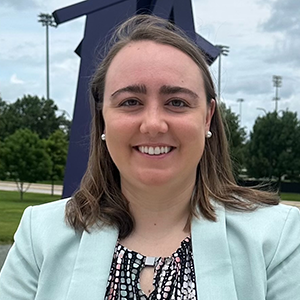
Bethanie earned her Bachelor of Arts degree as a triple major in Mathematics, Spanish, and Computer Science from Berea College in 2020. During her time at Berea, she was a Bonner Scholar and a member of the women's basketball team, earning All-American honors for her athletic achievements. She completed her Master of Science in Computer Science with a concentration in Cybersecurity at Tennessee Technological University in 2022, under the supervision of Dr. Ambareen Siraj, and earned her Ph.D. in Engineering with a major in Computer Science in 2025 under the guidance of Dr. Muhammad Ismail. Her dissertation, titled "Multi-Source Data Analysis and an Effective AI-Assisted Detection Framework for Cyber-Physical Attacks in Smart Manufacturing," focused on leveraging AI-driven approaches and analyzing various data sources to detect and mitigate cyber-physical attacks in manufacturing systems.
Throughout her graduate studies, Bethanie received the College of Engineering Distinguished Fellowship and the National Science Foundation (NSF) Scholarship for Service (SFS). She was a year-round intern at Sandia National Laboratories as part of the Center for Cyber Defenders (CCD) program, where she contributed to national research initiatives under CyManII. Bethanie held several executive leadership roles at Tennessee Tech, including Vice President of Cyber Eagles and Graduate Student Club. She also served as a Ph.D. advisor for Women in Cybersecurity (WiCyS). Through these roles, she actively mentored students, organized outreach events, and fostered a supportive community for women in cybersecurity.
Bethanie's current research interests include cyber-physical security, modeling and simulation of industrial control systems, and leveraging AI for advanced manufacturing. As an Early Career R&D, S&E Cybersecurity Engineer at Sandia, she is committed to bridging academic innovation and national security applications to protect critical infrastructure and ensure its resilience.
Ways to Watch