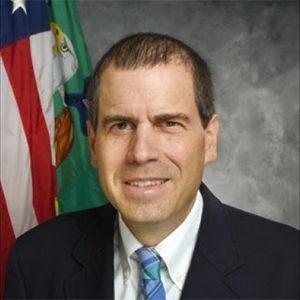

Director of CERIAS and Samuel D. Conte Professor of Computer Science - Purdue University[>
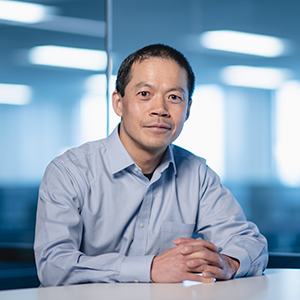
Provost and Miller Family Professor of Statistics and Computer Science - Purdue University[>
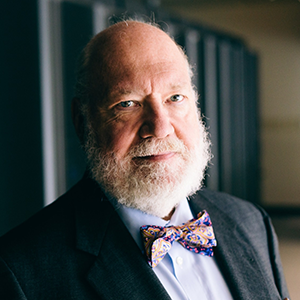
Executive Director Emeritus and Distinguished Professor of Computer Science - Purdue University[>
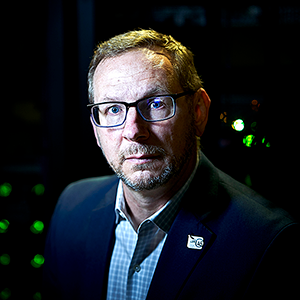
Principal Member of Technical Staff - Cyber Systems Research - Sandia National Laboratories[>
Professor, Agricultural & Biological Engineering | Dean's Fellow for Digital Agriculture - Purdue University[>
Associate Professor, Department of Agricultural & Biological Engineering, Elmore Family School of Electrical and Computer Engineering, Purdue University and CEO, KeyByte LLC [>
Executive Vice President of Research, Purdue Office of Research, Bruce Reese Professor of Aeronautics and Astronautics, Purdue University[>
Assistant Professor of Civil and Construction Engineering and Assistant Director of the Center for Road Safety, Purdue University[>
Harold DeGroff Associate Professor of Aeronautics and Astronautics - Purdue University[>
Samuel D. Conte Distinguished Professor of Computer Science, Director of Institute for Physical Artificial Intelligence (IPAI), Purdue University[>
Goodson Distinguished Professor of Mechanical Engineering and President’s Fellow - Purdue University[>
Kraig Kiehl
Director of Emergency Preparedness, Pennsylvania Department of Agriculture
Modern agriculture relies on interconnected digital systems that support production, logistics, food processing, and distribution. As these technologies expand, so do the opportunities for cyber threat actors to disrupt operations, manipulate data, and create cascading effects across the food supply chain.
This keynote examines how cyber vulnerabilities in agriculture can translate into real-world operational disruptions affecting producers, processors, markets, and public confidence. Drawing from national security and emergency management experience, the presentation highlights emerging threat trends, convergence between cyber and physical risk, and practical strategies to strengthen resilience across the food and agriculture sector.
Participants will gain insight into why agriculture is increasingly targeted, where systemic vulnerabilities exist, and how cross-sector coordination can reduce risk to one of the nation’s most essential critical infrastructure sectors.
Brian Peretti
Former Chief Technology Officer - US Dept. Treasury (Retired)
Closing Keynote - April 8th, 4:30pm ET “AI, Cybersecurity, and the Path Forward”
Brian J. Peretti is a career member of the Senior Executive Service at the United States Department of the Treasury. In his final position, he served as Treasury’s Chief Technology Officer and Deputy Chief Artificial Intelligence (AI) Officer in the Office of Chief Information Officer.
As Treasury’s Chief Technology Officer, Mr. Peretti establishes, leads, and manages a comprehensive, multi-year strategic and long-range planning process that promotes the vision for IT and ensures consistent progress toward accomplishing the CIO’s vision, while identifying and leveraging common technology solutions to support business processes and work methods and/or to improve effectiveness of current technologies while also developing appropriate policy for emerging technology such as Artificial Intelligence, Machine Learning, Biometrics and Quantum Computing.
As Treasury’s Deputy Chief AI Officer, Mr. Peretti supported Treasury’s Chief AI Officer in advancing the Department’s deployment of this emerging technology. In this capacity, he oversaw the publication of Treasury’s report, Managing Artificial Intelligence-Specific Cybersecurity Risks in the Financial Services Sector, and directed the subsequent lines of effort. Additionally, serving in this position has seen him designated as the Executive Officer for the Department’s AI Governance Board as well as the Department’s representative to the Office of the Director of National Intelligence’s CAIO Council.
In addition, Mr. Peretti leads the development of domestic and international operational resilience policy, including cyber, as part of Treasury’s Sector Risk Management Agency responsibility for the financial services sector. In this role, he spearheads Treasury’s efforts to increase multi-directional sharing of cyber threat and vulnerability information. He also serves as the United States’s designated subject matter expert at the Group of 7 Cyber Expert Group (G-7 CEG).
Mr. Peretti has served at the Treasury for over 22 years with increasing levels of responsibility, including being named the Senior Career Official Executing the Duties of the Assistant Secretary for Financial Institutions during the transition from the Obama to the Trump Administration. Based on his expertise in critical infrastructure protection and operational resilience, he was detailed to the Department of Homeland Security, Cybersecurity and Infrastructure Security Agency’s National Risk Management Center during the intial response to the COVID-19 pandemic and served as the first Senior Advisor for Security and the Economy. He also speadheaded DHS response to the SolarWinds cyber incident.
A sought-after speaker and presenter, Mr. Peretti has been the recipient of numerous awards and honors throughout his career. Most recently, he received the 12th Annual Billington CyberSecurity Leadership Award at the 2023 Annual Billington CyberSecurity Summit.
Prior to joining the Treasury, Mr. Peretti was an associate in Shook, Hardy & Bacon’s Corporate Banking and Finance Section in Washington, D.C., and was the General Counsel for the Wright Patman Congressional Federal Credit Union. He has authored numerous publications related to financial sector operations, including payment systems.
Mr. Peretti received his bachelor’s degree from Rider University (cum laude) in 1989, and his law degree from American University’s Washington College of Law (cum laude) in 1992.
Yuan (Emily) Xue
Head of Enterprise AI - Scale AI
AI systems are rapidly evolving from simple chat interfaces into long-running, tool-using agents embedded in real software and enterprise workflows. These systems increasingly generate code, invoke tools, access memory, make decisions, and interact with production infrastructure, creating new classes of risks and failures that cannot be understood purely as model safety issues, or fully addressed through traditional software testing or classical system security approaches alone. Instead, failures emerge across the full operational stack, from model behavior and tool use to runtime state, system boundaries, and human oversight.
This talk shares a perspective that trustworthy AI agents require a broader engineering perspective spanning offline testing, online assurance, and post-hoc auditing. More importantly, they require us to connect ideas that are currently fragmented across communities. Machine learning researchers bring model behavior and alignment; software engineers bring architecture and testing; systems researchers bring fault tolerance and observability; security researchers bring threat modeling, containment, and adversarial thinking. Yet today, these perspectives often remain siloed, leaving critical gaps in how we reason about trustworthiness in deployed AI systems.
This talk aims to explore a broader landscape of questions. What should it mean to engineer trustworthy AI systems when models become agents and agents become infrastructure? What concepts from existing disciplines still apply, which assumptions break, and what new questions must we now ask? The central message is simple: trustworthy AI will not come from better models alone. It will require a systems-level discipline and a shared map across communities for building and governing AI agents in the real world.
Dr. Emily (Yuan) Xue is a senior AI and technology executive, researcher, and tenured professor. She has more than two decades of experience developing advanced AI and optimisation technologies for enterprise transformation and intelligent decision-making.
At Scale AI, she serves as Head of Enterprise AI, driving the company’s enterprise AI strategy and helping organizations deploy reliable and effective generative AI systems. Prior to joining Scale AI, Dr. Xue spent nearly a decade at Google. She led several of Google’s most ambitious AI pursuits. As a senior engineering lead, she initiated and guided the development of core technologies and products for cloud AI and Gemini for enterprise. She was among the early members of Google Brain, leading the development of deep learning methods for healthcare.
Before Google, Dr. Xue was a tenured associate professor of Computer Science at Vanderbilt University and a recipient of the National Science Foundation CAREER Award.
Mustafa Abdallah
Assistant Professor, School of Applied and Creative Computing, Purdue University
April 7th, 11:15am, Lightning Talk, “Can We Trust AI‑Based Intrusion Detection? An Explainable AI Evaluation Perspective”
The rapid growth and increasing sophistication of network intrusions have driven widespread adoption of artificial intelligence (AI)-based intrusion detection systems (IDS). While these models often achieve strong detection performance, their opaque decision-making processes hinder trust, validation, and operational use by human security analysts. Explainable AI (XAI) offers a promising avenue to bridge this gap, yet there remains little consensus on how to rigorously evaluate and operationalize XAI methods for network security. In this talk, I will present an end-to-end evaluation framework for black-box XAI techniques applied to network intrusion detection. Our framework benchmarks seven diverse AI-based IDS models across three widely used intrusion detection datasets, capturing a range of network behaviors and attack characteristics. We generate both global and local explanations using two popular XAI methods—SHAP and LIME—and systematically evaluate them using six complementary metrics: descriptive accuracy, sparsity, stability, efficiency, robustness, and completeness. These metrics reflect critical requirements from both machine learning and network security perspectives. Our results highlight both the strengths and limitations of current black-box XAI methods for network security and provide actionable insights for security analysts and IDS designers. We release our framework as an open baseline to support reproducible and comparable XAI research for intrusion detection systems.
Mustafa Abdallah is an interdisciplinary cybersecurity and AI researcher whose work bridges game theory, human decision-making, explainable artificial intelligence, and the security of cyber-physical and Internet-of-Things systems. He earned his Ph.D. from the School of Electrical and Computer Engineering at Purdue University. He is currently a tenure-track assistant professor in the School of Applied and Creative Computing at Purdue University in Indianapolis. Before joining Purdue, he served as faculty at Indiana University-Purdue University Indianapolis (IUPUI). Since joining Purdue in 2024, he has led multiple research thrusts at the intersection of proactive security, human behavior, and AI-driven intrusion detection. He also pioneered meta-learning–based forecasting and automated model selection methods. His research efforts have produced more than 30 peer-reviewed journal and 24 conference publications in top venues. Dr. Abdallah has mentored more than 20 graduate and undergraduate researchers, advised Ph.D. and M.S. students across Purdue and IUPUI, and collaborated with industry partners such as Adobe, Cummins, and Elevance Health. His research community leadership includes serving as a reviewer for NSF, a program committee member for ACM and IEEE cybersecurity venues, a reviewer and guest editor for multiple academic journals, and a member of multiple Purdue research institutes. Collectively, his work contributes to building trustworthy, interpretable, and human-aligned AI systems that enhance security and resilience in critical infrastructure and cyber-physical ecosystems.
Enrique Alvarez
Public Sector Advisor - Google Cloud
April 8th, 10:15am - Panel #3 - “Agentic AI and Cybersecurity”
Enrique Alvarez is a Public Sector Advisor in Google Cloud’s Office of the Chief Information Security Officer (OCISO). He specializes working with State, Local, and Educational partners, including the US Government and Department of Defense – in adopting cloud and AI-enabled transformational goals. Prior to joining Google, Enrique retired from the Federal Bureau of Investigation (FBI) after serving as a special agent and supervisor, where he led a cyber investigative squad focused on state-sponsored threats.
Drawing upon his law enforcement and military experience, Enrique has firsthand knowledge of the sophisticated threats faced by public sector organizations. He uses this expertise to explain how Google Cloud’s security measures align with the unique needs of public sector customers.
Enrique also served as a commissioned officer in the US Navy, retiring from the reserve component in 2013.
Enrique holds degrees from Stanford University and the Navy Postgraduate School.
His LinkedIn profile can be found at https://www.linkedin.com/in/enriquemalvarez/.
Edmon Begoli
Director, Center for AI Security Research - Oak Ridge National Laboratory
April 7th, 03:10pm Panel #2 - “Space Cybersecurity”
Edmon Begoli, is a founding director of ORNL’s Center for AI Security Research (CAISER), and is a distinguished member of the ORNL research staff.
He specializes in the research, design, and development of resilient, secure, and scalable machine learning and analytic architectures. Additionally, Edmon has been leading national programs focused on AI security, fraud prevention, veteran suicide prevention (collaboration with PERC/REACH VET), precision, and personalized medicine (MVP CHAMPION). During his tenure at ORNL, Edmon led the design of original Knowledge Discovery Infrastructure (KDI) and the Citadel efforts, the first DOE platforms for computing on protected data, including leadership-class systems.
Edmon currently co-leads ORNL’s internal AI research initiative with focus on AI safety and security applications.
Edmon is a IEEE Computer Society distinguished contributor, ACM senior member of ACM and the Apache Software Foundation (ASF) committer. In 2022, Edmon was selected as a Google Research Innovator for his academic research in robust streaming and language processing architectures.
Edmon holds undergraduate, graduate (University of Colorado-Boulder), and doctoral degrees (University of Tennessee) in Computer Science. After his PhD, Edmon was a visiting scholar with the UC Berkeley EECS department, where he is currently an associated researcher with the Berkeley’s SKY Computing lab. In addition, Edmon regularly teaches graduate-level classes at the University of Tennessee-Knoxville, EECS department.
Elisa Bertino
Samuel D. Conte Distinguished Professor of Computer Science - Purdue University
Panel #3, April 8th, 10:15am - “Agentic AI and Cybersecurity”
Professor Elisa Bertino joined Purdue in January 2004 as professor in Computer Science and research director at CERIAS. Her research interests cover many areas in the fields of information security and database systems. Her research combines both theoretical and practical aspects, addressing applications on a number of domains, such as medicine and humanities. Current research includes: access control systems, secure publishing techniques and secure broadcast for XML data; advanced RBAC models and foundations of access control models; trust negotiation languages and privacy; data mining and security; multi-strategy filtering systems for Web pages and sites; security for grid computing systems; integration of virtual reality techniques and databases; and geographical information systems and spatial databases.
Professor Bertino serves or has served on the editorial boards of several journals - many of which are related to security, such as the ACM Transactions on Information and System Security, the IEEE Security & Privacy Magazine, and IEEE Transactions on Dependable and Secure Computing. She is currently serving as program chair of the 36th International Conference on Very Large Data Bases (VLDB 2010). Professor Bertino is a Fellow of the Institute of Electrical and Electronics Engineers and a Fellow of ACM. She received the IEEE Computer Society Technical Achievement award in 2002 for outstanding contributions to database systems and database security and advanced data management systems, and received the 2005 Tsutomu Kanai Award by the IEEE Computer Society for pioneering and innovative research contributions to secure distributed systems.
She is recently served in the IEEE Computer Society Board of Governors and as Chair of ACM SIGSAC.
Jeremiah Blocki
Associate Professor of Computer Science, Purdue University
April 8th, 3:50pm, Lightning Talk “Memory Hard Functions: A Cryptographic Tool to Protect Low Entropy Secrets against Brute-Force Attacks”
Data breaches over the past decade have exposed billions of user passwords to the threat of offline brute-force attacks. Major incidents affecting organizations such as Yahoo!, Dropbox, LastPass, and others have demonstrated that once attackers obtain password hash values from an authentication server, they can attempt to recover user passwords by repeatedly guessing candidate passwords and comparing their hashes to the stolen values. Because these guesses are performed offline, attackers face no risk of account lockout or detection after repeated failures. Instead, the attacker is limited only by the computational cost of evaluating the password hashing algorithm.
This threat has become increasingly serious for two reasons. First, users often choose weak or low-entropy passwords that can be guessed with relatively few attempts. Second, specialized hardware such as GPUs, FPGAs, and ASICs has dramatically reduced the cost of evaluating traditional cryptographic hash functions at scale. As a result, an attacker with modest hardware resources can test billions or even trillions of password guesses per second. In this setting, password hashing algorithms serve as a critical last line of defense by deliberately increasing the cost of verifying each password guess, thereby making large-scale offline attacks economically less attractive.
A secure password hashing algorithm must balance two competing goals. On the one hand, it should make it prohibitively expensive for an attacker to evaluate the function repeatedly, even when using highly optimized hardware. On the other hand, it must remain efficient enough that legitimate users can authenticate quickly on commodity devices. Ideally, the algorithm should require substantial memory resources as well as computation, since memory is more difficult and expensive to scale in specialized hardware. This observation motivated the development of memory-hard functions (MHFs)—cryptographic primitives designed so that evaluating the function requires large amounts of memory that must be maintained throughout the computation.
Memory-hard functions (MHFs) are a vital cryptographic tool to protect low-entropy secrets, such as user chosen passwords, against brute-force attacks. Although many candidate MHFs emerged during the Password Hashing Competition (2013–2015), scientific understanding of MHFs has advanced significantly since then. This talk surveys that progress, highlighting: (1) weaknesses in early definitions of memory-hardness, (2) improved security definitions for MHFs, (3) pebbling attacks on Argon2i and other proposed side-channel-resistant MHFs, (4) the connection between MHF security and the graph-theoretic notion of depth-robustness, and (5) improved constructions of side-channel-resistant MHFs. The talk will conclude with open research challenges and the speaker’s perspective on the future standardization of password hashing.
Jeremiah Blocki is an Associate Professor of Computer Science at Purdue University. He received his doctorate at Carnegie Mellon University under the supervision of Manuel Blum and Anupam Datta. Prior to joining Purdue he spent time as a Cryptography Fellow at the Simons Institute for the Theory of Computing at Berkeley and as a postdoctoral researcher at Microsoft Research New England. Jeremiah describes himself as a theoretical computer scientist who is interested in applying fundamental ideas from computer science to address practical problems in usable privacy and security. His research interests include cryptography, privacy, password security, and human authentication. He is the recipient of an NSF CRII award, an NSF CAREER award, a Purdue Seed for Success Award and was selected as the ``Most Influential Professor’’ by the Purdue CS Graduate Student Board (2019).
Jacob Bond
Artificial Intelligence Researcher, General Motors
Day 1, Transportation Panel 10:15am
Jacob graduated from Purdue with a Ph.D. in mathematics, starting his career at General Motors developing cybersecurity solutions for connected vehicles. He began exploring the security of automated driving systems, joining General Motors R&D with a focus on the runtime security of deep learning models and the trustworthy deployment of automated systems. Jacob currently leads the Biometrics & Sensing Research group in addition to researching automated driving solutions for defense and space applications.
Ruby Booth
Principal Member of Technical Staff - Cyber Systems Research - Sandia National Laboratories
April 8th, 11:45am Technology Talk - “Understanding Strategic Adversary Decision Making in a High Consequence Systems Context”
The United States’ national security community recognizes the need to make confident, evidence-based assertions about risks to high consequence systems. However, the very nature of these systems makes them challenging to assure. In specific, high consequence systems such as weapons, weapons platforms, satellites, and critical infrastructure assets must function perfectly, or near perfectly, for years or even decades, in the face of strong adversary motivation to compromise them. Yet, they exist in environments or have characteristics that make them hard to modify once deployed. This makes assurance especially challenging and informed risk management even more essential.
The adversaries who seek to compromise HCS are highly resourced and use those resources to pursue geopolitical impacts. This session will discuss the use of an adversary framework to inform decision making, by placing a practical lens on adversary choice optimization -- taking the decision maker quickly and easily through a series of focusing questions:
Despite its simplicity, this represents a powerful tool in understanding strategic adversary decision making in a high consequence systems context.
SNL is managed and operated by NTESS under DOE NNSA contract DE-NA0003525
Dr. Ruby E. Booth is a principal member of the technical staff at Sandia National Laboratories, where she serves as a cybersecurity analyst and national security subject matter expert. She specializes in the interaction between human behavior and cybersecurity. She received her undergraduate degree from Rhodes College and an MS and PhD from the University of Memphis. She is a nonresident fellow of the Berkeley Risk and Security Lab and the Center for Long-Term Cybersecurity at the University of California, Berkeley.
Dennis Buckmaster
Professor, Agricultural & Biological Engineering | Dean's Fellow for Digital Agriculture - Purdue University
April 8th, 01:30pm Panel #4 - “Securing Agriculture and the Food Chain”
Dr. Dennis R. Buckmaster is a Professor in Agricultural and Biological Engineering at Purdue University. He earned a B.S. in Agricultural Engineering from Purdue University and M.S. and Ph.D. degrees in Agricultural Engineering from Michigan State University. He joined the Purdue ABE faculty in 2006.
For 17 years prior to coming to Purdue as an Associate Professor, Dr. Buckmaster was a faculty member at Penn State University. He had focused on technologies affecting storage, transport, and utilization of forages and biomass. His current focus is in digital agriculture with work in the data pipeline from phenomena sensing, including communication and computation, and decision support. Open source efforts through the Open Ag Technology and Systems Center integrate with his research, education and outreach efforts.
Dr. Buckmaster co-coordinates the Agricultural Systems Management program and advises many students. He teaches ASM 10500 - Computing Technology with Applications, AGR 10800 - Ag Tech and Innovation, and ASM 42100 - Senior Seminar. He has taught several different courses over the years regarding agricultural machinery and off-road equipment design. Dr. Buckmaster is a member of the American Society of Agricultural and Biological Engineers, the American Forage and Grassland Council, and the Fluid Power Society; he is a registered professional engineer and certified hydraulic specialist.
Somali Chaterji
Associate Professor, Department of Agricultural & Biological Engineering, Elmore Family School of Electrical and Computer Engineering, Purdue University and CEO, KeyByte LLC
April 7th 5:10pm, Lightning Talk
I lead ICAN (Innovatory for Cells and Neural Machines), where my research centers on rightsizing ML systems for real-world deployment by adapting computation to the structure of the input, the needs of the task, and the constraints of the underlying system. This perspective is increasingly important as AI moves beyond large data centers into embedded, interactive, and resource-constrained environments, where latency, energy, compute, and robustness must be treated as first-class design constraints.
In this lightning talk, I will focus primarily on Agile3D [MobiSys 2025], a content- and contention-aware framework for real-time 3D object detection on mobile GPUs. By adapting inference online to both scene complexity and runtime contention, Agile3D enables efficient and reliable LiDAR perception under tight latency targets, even when compute availability fluctuates at runtime. More broadly, this work shows that edge AI should be designed as an adaptive system, not a fixed-cost pipeline. I will then briefly close with a teaser from ongoing work in my lab on efficient diffusion models, including ReCon [ECCV 2024], to illustrate how similar ideas around adaptive computation extend to generative models.
Overall, this work reflects a broader vision in ICAN: intelligent systems should not always run at maximum cost, but should instead allocate computation where it matters most. At ICAN, we pursue this resource-aware view across perception, generation, and embedded intelligence to help make advanced AI more efficient, resilient, and deployable in the real world.
Prof. Somali Chaterji (pronounced shoh-MAH-lee CHA-ter-jee) is an Associate Professor in Agricultural and Biological Engineering and Electrical and Computer Engineering at Purdue University, where she directs ICAN, the Innovatory for Cells and Neural Machines. She is also the Founder and CEO of KeyByte, a cloud computing startup. Her research focuses on resilient, efficient, and interpretable machine learning for cyber-physical systems (CPS), as well as health and biology applications. Her work examines how advanced intelligence can operate robustly under real-world constraints, including limited compute, latency and energy budgets, workload variability, and system stress. This includes enabling resource-constrained edge and embedded platforms, including mobile GPUs for computer vision and sensing applications, to perform sophisticated analytics under tight resource constraints, as well as developing machine learning methods for human, plant, and animal health, including efficient scouting of fields and early disease detection in low-label settings. More broadly, her research bridges systems, machine learning, and data-driven discovery across computing and biology.
Prof. Chaterji is a University Faculty Scholar at Purdue, received the NSF CAREER Award in 2022, and recently received an NVIDIA gift in support of her research on efficient and adaptive machine learning systems. She co-organized the 2024 NSF CPS Principal Investigators Meeting and serves as a Co-PI for the NSF CISE CHORUS Center. She is also a Co-PI in the Army’s Assured Autonomy Innovation Institute (A2I2) and contributed to the WHIN initiative supporting regional innovation in manufacturing and digital agriculture. In 2023, she was invited to the National Academy of Engineering’s Japan-America Frontiers of Engineering (JAFOE) symposium. More information is available at https://schaterji.io/publications/.
Stacey Connaughton
Professor, Brian Lamb School of Communication - Purdue University
April 7th, 03:10pm Panel #2 - “Space Cybersecurity”
Stacey L. Connaughton, Ph.D. is a Professor in the Brian Lamb School of Communication at Purdue University and the Director of the Purdue Policy Research Institute (PPRI) in Purdue’s Discovery Park District. PPRI hosts the annual Space Policy, Science, and Technology Symposium at Purdue which convenes government, private sector, and academics in the United States and around the world. She serves as the Vice Chair for the Purdue@DC Council. Her research examines leadership and multi-stakeholder organizing, most recently in the context of political violence prevention. Dr. Connaughton co-founded the Purdue Peace Project (PPP). In that capacity, she has led the multi-stakeholder relationship building, project development, and monitoring and evaluation for locally led political violence prevention initiatives in West Africa, working closely with government, private sector, NGOs, civil society, and everyday citizens. From that body of work, Dr. Connaughton developed what she calls the Local Leadership Model of political violence prevention and the Relationally Attentive Approach to doing engaged scholarship (i.e., academic-practitioner collaborations). She has authored four books, several peer-reviewed journal articles, and numerous practitioner articles and white papers based on her empirical work on leadership and peacebuilding.
Daniel DeLaurentis
Executive Vice President of Research, Purdue Office of Research, Bruce Reese Professor of Aeronautics and Astronautics, Purdue University
April 7th 3:10pm, Panel #2:“Space Cybersecurity”
Dr. Daniel DeLaurentis is Executive Vice President for Research (EVPR) and the Bruce Reese professor of Aeronautics and Astronautics at Purdue University. As EVPR, he is the Senior Research Officer for the University responsible for increasing the scale and impact of Purdue University’s research enterprise and enabling the success of faculty-driven research by supporting cross-college collaborations. His own research program operates through the Center for Integrated Systems in Aerospace (CISA), working with faculty colleagues and students to research problem formulation, modeling, design and system engineering methods for aerospace systems and systems-of-systems. Research outcomes cover all facets of system of systems (SoS) engineering, including advances in modeling and simulation, dependency analysis methodologies, complexity assessment, optimization, and control with applications ranging from urban and regional Advanced Aerial Mobility, supersonic fleets, and more recently hypersonic vehicles and missions.
DeLaurentis previously served as Chief Scientist of the U.S. DoD’s Systems Engineering Research Center (SERC) UARC, working to understand the systems engineering research needs of the defense community (primarily) and translate that to research programs that are then mapped to the nation’s best researchers and students in the SERC network of 25 universities. He is Senior Research Fellow at the Krach Institute for Tech Diplomacy at Purdue. Dr. DeLaurentis has been elected Fellow of the International Council on Systems Engineering (INCOSE) and Fellow of the American Institute of Aeronautics and Astronautics (AIAA).
Shengwang Du
Scifres Family Professor of Electrical and Computer Engineering - Purdue University
April 8th, 11:15a, Technology Talk, “Distributed Quantum Computing: When Quantum Networks Meet Quantum Computing”
Quantum computing promises transformative advances in science, artificial intelligence, and national security, but scaling today’s machines to large numbers of qubits remains extremely challenging. Instead of building a single monolithic processor, future quantum systems may resemble cloud computing infrastructures composed of many small “quantum laptops” interconnected through quantum networks. This talk introduces architectures for distributed quantum computing (DQC), particularly the Shared Quantum Gate Processing Unit (S-QGPU) that enables deterministic quantum gate operations between distant processors [1, 2]. Acting as a shared quantum server, the S-QGPU allows distributed quantum processors to function as a unified system. This approach provides a scalable pathway toward networked quantum computing and has important implications for secure quantum infrastructure and future quantum-enabled cyber systems.
[1] S. Du, Y. Ding, and C. Qiao, “S-QGPU: Shared quantum gate processing unit for distributed quantum computing,” AVS Quantum Sci. 7, 013803 (2025).
[2] E. Oh, X. Lai, J. Wen, and S. Du, “Distributed quantum computing with photons and atomic memories,” Adv. Quantum Technol. 6, 2300007 (2023).
Dr. Shengwang Du is the Scifres Family Professor of Electrical and Computer Engineering, and Professor of Physics and Astronomy. His research focuses on quantum optics and its applications in quantum networks, quantum computing, quantum sensing, optical neural networks for AI and optical microscopy. Du’s work in optical microscopy led to the establishment of Light Innovation Technology USA, a startup for commercializing cutting-edge optical microscopies and bioimaging techniques. He holds several positions within the scientific field, including serving as an Associate Editor for Optics Express. Prof. Du is a Fellow of Optica, a Fellow of the American Physical Society, and a Senior Member of the National Academy of Inventors.
Courtney Falk
Research Engineer, CERIAS, Purdue University
April 7th, 10:15am - Panel #1 - “Transportation Security”
Dr. Courtney Falk is a cybersecurity professional with twenty years of experience in software engineering, reverse engineering, and cyber threat intelligence. He earned his degrees from Purdue University, including a Doctor of Philosophy in information security. His work experience has covered government, industry, and academia. Currently he is a research engineer for the CERIAS institute at Purdue University, leading federally-supported projects as a principal investigator.
Yiheng Feng
Assistant Professor of Civil and Construction Engineering and Assistant Director of the Center for Road Safety, Purdue University
April 7th, 10:15am Panel #1: “Transportation Security”
Dr. Yiheng Feng is an assistant professor and assistant director of the Center for Road Safety (CRS) at Lyles School of Civil and Construction Engineering, Purdue University. He received his Ph.D. from the Department of Systems and Industrial Engineering at the University of Arizona. His research areas include connected and automated vehicles (CAVs) and smart transportation infrastructure, with a focus on cooperative driving automation and transportation system cybersecurity. He has served as PI and Co-PI in many research projects funded by U.S. National Science Foundation (NSF), U.S. Department of Transportation (USDOT), U.S. Department of Energy (USDOE), state DOTs, and industrial companies. His work appeared in a number of top transportation journals and security conferences and is serving as an editor of multiple journals. He is a member of the Traffic Signal Systems Committee (ACP25) at TRB and co-chair of Simulation Subcommittee. He is a recipient of the NSF CAREER award in 2024 and best paper and dissertation awards from multiple organizations.
Carolin Frueh
Harold DeGroff Associate Professor of Aeronautics and Astronautics - Purdue University
April 7th, 02:00pm Lightning Talk “Autonomous Collision Avoidance Decisions Fusing Machine Learning and Deterministic Techniques for Satellites in Low Earth Orbits”
On-Orbit Collision avoidance decisions, the decision of a maneuver is performed in case of a potential conjunction between two satellites or satellites and space debris is integral for the physical integrity of on-orbit assets. It is crucial for the sustainable and safe use of space and spacecraft resiliency. In this presentation, we show that different organizations and entities reach vastly different decisions for the exact same conjunction events. In our approach we use a mixture of classical Dempster-Shafter decision making in combination with machine learning based methods. The data sets used a real data sets from two different space entities and simulated data which is able to reproduce all aspects of the real data.
Prof. Frueh is the Harold DeGroff Associate Professor of Aeronautics and Astronautics at Purdue. She is the director of the Purdue Optical Ground Station, and the chair of the International Committee on Space Research (COSPAR) Panel on Potentially Environmentally Detrimental Activities in Space (PEDAS). Dr. Frueh has worked and researched in the area of Space Domain Awareness and Space Traffic Management over the past two decades, leading research in detection and tasking, astrodynamics, and space object characterization beyond the center of mass in the near-Earth and the cislunar realm. Dr. Frueh authored more than 120 publications.
Brad Fruth
Director of Innovation, Beck’s Hybrids
April 8th, 1:30pm Panel: “Securing Agriculture and the Food Chain”
As the Director of Innovation at Beck’s Hybrids, Brad Fruth works vigorously to deliver value to the American farmer. For more than 21 years, Brad has dedicated his days and nights to delivering the successful convergence of IT, data, innovation, and agriculture. As a passionate advocate for agricultural, Brad is actively engaged in multiple initiatives throughout the country. He sees increased access to rural broadband, on farm testing devoted to driving net farm income, and focused collaboration across various sectors as key initiatives to bridging the gap between technology and agriculture. Brad currently resides on his family hog farm in Miami County, Indiana with his wife and four daughters raising show pigs and operating a direct to consumer pork business.
Dan Goldwasser
Associate Professor of Computer Science, Purdue Univeristy
April 8th, 3:20pm, Technology Talk “Social-Pragmatic Challenges for Large Language Models”
Recent advances have profoundly transformed the landscape of AI research. Language understanding tasks once considered “AI-complete”, i.e., requiring deep semantic understanding and general reasoning, now exhibit near-perfect performance on established benchmarks. While such progress suggests significant gains in semantic processing, successful communication extends beyond logical problem solving. Human communication relies critically on the ability to interpret nuance, infer intent, and navigate complex social and pragmatic cues.
In this talk, I will examine a set of social-pragmatic understanding tasks that probe models’ ability to reason about and interpret socially grounded information. These tasks, which humans typically handle with ease, remain challenging for current AI systems. I will present recent empirical findings highlighting these limitations and discuss their implications for our understanding of language model capabilities.
Dan Goldwasser is an Associate Professor at the Department of Computer Science at Purdue University. He is broadly interested in connecting natural language with real world scenarios and using them to guide natural language understanding. His current interests focus on grounding social and political discourse to support understanding situational scenario understanding by combining LLMs with neuro-symbolic representations.
Dan Completed his PhD in Computer Science at the University of Illinois at Urbana-Champaign and was a postdoctoral researcher at the University of Maryland. He has received research support from the NSF, including a CAREER award, DARPA, Google and Amazon.
Ananth Grama
Samuel D. Conte Distinguished Professor of Computer Science, Director of Institute for Physical Artificial Intelligence (IPAI), Purdue University
Panel #3, April 8th, 10:15am - “Agentic AI and Cybersecurity”
Ananth Grama’s research focuses on parallel and distributed computing with applications in modeling, design, advanced manufacturing, machine learning, and artificial intelligence for complex physical systems. His work on computer systems focuses on load balancing, resource management, data management, and security. His recent work on algorithms and analysis focuses on establishing fundamental bounds on hallucinations, online learning, learning in faulty and private environments, and quantum machine learning. He applies these systems concepts and algorithms to a range of applications, including materials modeling, systems biology, transcriptomics, clinical analytics, and structural design.
Aniket Kate
Associate Professor, University Faculty Scholar, Computer Science, Purdue University
April 7th, 10:15am Panel #1: “Transportation Security”
Prof. Aniket Kate is an applied cryptographer and a privacy researcher. His research projects aim at bridging the large gap between cryptographic research, and systems security and privacy research. Along with producing theoretically elegant cryptographic results, his team endeavors to make them useful in real-world scenarios. In the long run, he wishes to resolve real-world robustness and privacy issues with ever-growing Internet-based systems by developing advanced-yet-practical cryptographic tools.
Before joining Purdue in 2015, Prof. Kate was a junior faculty member and an independent research group leader at Saarland University in Germany, where he was heading the Cryptographic Systems Research Group. He was a postdoctoral researcher at Max Planck Institute for Software Systems (MPI-SWS), Germany for 2010 until 2012, and he received his PhD from the University of Waterloo, Canada in 2010.
Josh Knox
Staff Engineer and Evangelist, Horizon3.ai
Panel #3, April 8th, 10:15am - “Agentic AI and Cybersecurity”
Joshua Knox — who prefers to go by simply, “Knox” — has been a cybersecurity technologist and evangelist for over a decade, and is now Principal Cybersecurity Strategist at Horizon3.ai. Before transitioning to the IT industry, Knox was a high school teacher for many years, teaching Python and JavaScript. When he is not working with his team, you can find him working on his home lab, building a new machine, studying for his next cert, or hacking CTF boxes.
Chris Lupini
Sr. Cybersecurity Consultant, Auto-ISAC & IQM Research Institute
April 7th, 10:15am - Panel #1 - “Transportation Security”
Chris earned his Bachelor’s Degree in Computer Engineering from the University of Michigan, and Master’s Degree in Electrical Engineering from Purdue University. He is also a licensed PE in the state of Indiana.
After 2 years with Martin Marietta in IT SW, Chris worked on in-vehicle communication network engineering for GM and Delphi for 25 years. He transitioned into Embedded Cybersecurity in 2013 and was Chief Cybersecurity Engineer for Aptiv’s pen test lab. He served as a Sr. Cybersecurity Consultant at Etas for 2 ½ years and is now a Sr. Product Security Engineer for Rolls-Royce North America in Indianapolis.
Chris is General Manager for Lupini Engineering LLC and has contract positions with the Auto-ISAC and IQM Research Institute.
Trey Malone
Associate Professor Agricultural Economics and Boehlje Chair - Purdue University
April 8th, 01:30pm Panel #4 - “Securing Agriculture and the Food Chain”
Trey Malone is an agri-food economist whose primary research interests are agribusiness entrepreneurship and public policy impacts on agri-food supply chains. He has published over 80 research articles in outlets including Food Policy, Journal of Business Venturing Insights, and the American Journal of Agricultural Economics. He and the students he has advised have collectively received dozens of awards and fellowships, including the Emerging Scholar Award from the Southern Agricultural Economics Association, Farm Journal Magazine’s 40 under 40, and the Presidential Award for Excellence in Research and Communication from the Food Distribution Research Society. Dr. Malone’s research has been funded by high-profile agencies such as the National Science Foundation, U.S. Department of Agriculture, the National Oceanic and Atmospheric Administration, and the World Wildlife Fund. Before joining Purdue, he was a faculty member at the University of Arkansas and Michigan State University. He earned his master’s and doctorate degrees from the Department of Agricultural Economics at Oklahoma State University and his bachelor’s from Rockhurst University. Prior roles include Agricultural Economics Fellow for Sustainable Food Systems for the Farm Foundation and Managing Editor at Agricultural & Resource Economics Review. He currently serves as North American Managing Editor at the International Food and Agribusiness Review and editor of the Journal of Regulatory Economics. His insights have been featured in popular press outlets, including the New York Times, TIME Magazine, CNBC, CNN, USA Today, Fast Company, and Popular Science.
Ajay Malshe
Goodson Distinguished Professor of Mechanical Engineering and President’s Fellow - Purdue University

April 7t, 03:10pm Panel #2 - “Space Cybersecurity”
Dr. Ajay Malshe serves as the Goodson Distinguished Professor of Mechanical Engineering and President’s Fellow at Purdue University. Dr. Malshe is the Ball Brothers Executive Director of the Manufacturing and Materials Research Laboratories (MMRL), Director of the nation’s first Center for In-Space Manufacturing (CISM), and Co-Director of eXcellence in Manufacturing and Operations (XMO) at Purdue.
He is an internationally recognized leader in in-space manufacturing, nanomaterials and nanomanufacturing, heterogeneous electronics packaging, bio-inspired designs, and translational innovation.
With over 40 years of experience spanning academia, entrepreneurship, small-manufacturing business ownership, and industrial leadership, he has transformed over 70% of patents from laboratory innovation into commercial success, impacting sectors such as transportation, energy, defense, space, EVs, manufacturing, and performance racing. A prolific innovator and educator, Dr. Malshe has authored 250+ publications, holds 28 patents, delivered 100+ keynote lectures worldwide, and mentored and educated over 1200 students and industrial engineers.
His pioneering breakthroughs include factory-in-space, convergent in-space manufacturing, ultrashort-laser processing, cBN superhard coatings, nanoelectromechanical machining, and 2D superlubrication. He was elected to the National Academy of Engineering (NAE), the highest honor an engineer can receive, “for innovations in nanomanufacturing with impact in multiple industry sectors.” He has earned 45+ global recognitions, including R&D 100 and Edison Awards. A Fellow of AAAS, ASME, ASM, CIRP, InstP, NAI, and SME, Dr. Malshe’s mission-driven career advances resilient, sustainable, and bio-inspired manufacturing for Earth and space.
Outside work, he enjoys painting (expression and abstract art), traveling, motorcycling, and homebrewing, and he guides his life by servant-leadership inspired by faith, family, and service to society.
Joel Rasmus
Managing Director of CERIAS - Purdue University
April 8th, 01:30pm Panel #4 - “Securing Agriculture and the Food Chain”
Joel Rasmus is Managing Director at Purdue University’s CERIAS; North America’s premier interdisciplinary institute for cyber and cyber-physical systems, with a research focus spanning security, resiliency, privacy, autonomy and trustworthy AI. He’s the architect of the CERIAS strategic partnership program, fostering industry tech transfer, collaborative research, and workforce development. Joel also established the Cyber + X program, encouraging interdisciplinary collaboration to address industry-sponsored projects. In partnership with Sandia National Labs, he pioneered SOL4CE, a cyber-range for large-scale cyber and cyber-physical systems. Joel’s efforts in academia-industry collaboration have earned him multiple Purdue engagement awards.
Ryan Roberts
Principal - Deloitte
April 7th, 03:10pm Panel #2 - “Space Cybersecurity”
Ryan Roberts is a leader in Deloitte’s Cyber Risk practice where he focuses on providing cyber operations capabilities and services to clients in the defense sector.
Eugene Spafford
Executive Director Emeritus and Distinguished Professor of Computer Science - Purdue University
Fireside Chat - April 7th, 4:10pm
Dr. Eugene Spafford is a Distinguished Professor with an appointment in Computer Science at Purdue University, where he has served on the faculty since 1987. He is also a professor of Philosophy (courtesy), a professor of Communication (courtesy), a professor of Electrical and Computer Engineering (courtesy), a professor of Nuclear Engineering (courtesy), and a Professor of Political Science (courtesy). He serves on several advisory and editorial boards. Spafford’s current research interests are primarily in information security, computer crime investigation, and information ethics. He is generally recognized as one of the senior leaders in the field of computing.
Spaf (as he is known to his friends, colleagues, and students) is the founder and Executive Director Emeritus of the Purdue CERIAS (Center for Education and Research in Information Assurance and Security). He was the founder and director of the (superseded) COAST Laboratory.
After 15 years as Editor-in-Chief of Computers and Security, the oldest journal in computer security, Spaf is now the Editor Emeritus.
Spaf is currently serving as a member of the board of directors of Sightline Security (a non-profit, charitable organization) and the RISE Information Security Foundation, Inc.
A more complete account of Spaf’s activities and background may be found on the “Short biography” page. You can find out about some of his recent activities by visiting his news page. A complete C.V. is also available.
Jerry Towler
Program Director – Intelligent Systems, Southwest Research Institute
April 7th 11:35am, Technology Talk, “From Yuma to Ukraine: Redefining Safety for Autonomous Defense Systems”
Mr. Towler is the Robotics Program Director at Southwest Research Institute (SwRI), where he oversees strategic programs in robotics, artificial intelligence, cybersecurity, and high-reliability systems. In this role, he supports research and development in mission-critical technologies across the robotics innovation ecosystem for commercial and government partners around the world.
Previously, Mr. Towler served as SwRI’s first Director of Robotics, unifying and leading multidisciplinary research teams across ground vehicles, maritime and naval robotics, space robotics, fabrication and inspection robotics, uncrewed aerial systems, and more.
Prior to his position in personnel management, Mr. Towler spent nearly a decade as a Senior Research Engineer in Unmanned Systems, with deep technical expertise in autonomous navigation and path planning. He has contributed to fielded autonomous systems on four continents and has been an active researcher in defense robotics since 2011 and mobile autonomy since 2009.
Patrick Wolfe
Provost and Miller Family Professor of Statistics and Computer Science - Purdue University
04/07 8:30am Opening Comments / Special Recognition
Prior to his current role as Provost, Patrick J. Wolfe served Purdue as the Frederick L. Hovde Dean of the College of Science and the Miller Family Professor of Statistics and Computer Science with faculty appointments in electrical and computer engineering. A native of the Midwest, Provost Wolfe is a 1998 graduate of the University of Illinois with degrees in electrical engineering and music and a 2003 doctorate from the University of Cambridge. Provost Wolfe specializes in the mathematical foundations of data science. After teaching at Cambridge and Harvard, he joined the faculty of University College London (UCL) in 2012, where he became the founding executive director of its Big Data Institute. He is currently a trustee and non-executive director of the Alan Turing Institute, the United Kingdom’s national institute for data science and artificial intelligence. He has received research awards from the Royal Society, the Acoustical Society of America, and the Institute of Electrical and Electronics Engineers (IEEE). He was named the inaugural IEEE Distinguished Lecturer in Data Science. A past recipient of the Presidential Early Career Award for Scientists and Engineers from the White House while at Harvard, Provost Wolfe provides expert advice on applications of data science to a range of national and international entities and organizations.
Dongyan Xu
Director of CERIAS and Samuel D. Conte Professor of Computer Science - Purdue University
April 8th, 10:15am - Panel #3 - “Agentic AI and Cybersecurity”
Dongyan Xu is a Samuel D. Conte Professor of Computer Science and Director of CERIAS, Purdue’s cybersecurity research center. His research focuses on cyber and cyber-physical security. He has also made early contributions to the areas of cloud computing and peer-to-peer media streaming/distribution. He is part of the Purdue System Security Lab (PurSec).
For computer system security, Xu and his students have been developing virtualization-based systems for capturing, investigating, and defending against stealthy computer malware (e.g., worms, rootkits, bots, and APTs). His team is also developing reverse engineering techniques for the analysis of binary artifacts such as binary programs and memory images. For cloud computing, Xu and his students have been developing advanced techniques for the creation, management, and performance optimization of virtual networked infrastructures on top of physical cloud infrastructures.
Xu received six Seed for Success Awards from Purdue University, a CAREER Award from the National Science Foundation (2006), and seven Best Paper/Best Student Paper Awards from the International Symposium on Recent Advances in Intrusion Detection (RAID 2008), ACM Symposium on Cloud Computing (SoCC 2011), IEEE/ACM International Conference on Automated Software Engineering (ASE 2013), USENIX Security Symposium (2014, Best Student Paper), ACM Conference on Computer and Communications Security (CCS 2015), Network and Distributed Systems Security Symposium (NDSS 2016), and USENIX Security Symposium (2017). He served on the Editorial Board of the ACM Transactions on Autonomous and Adaptive Systems (TAAS) and has served on program committees of major security and cloud computing conferences (e.g., CCS, NDSS, S&P, USENIX Security, and SOCC). He was selected a University Faculty Scholar in 2012 and has received the College of Science Undergraduate Advising (2008), Graduate Advising (2014), Leadership (2013, 2016), Research (2015), and Team (2015, 2017) Awards. Past and current sponsors of Xu’s research include the AFOSR, AFRL, Army CERDEC, DARPA, IARPA, NSA, NSF, ONR, Sandia National Labs, Cisco Systems, DOCOMO USA Labs, ETRI, Microsoft Research, Northrop Grumman, Vencore Labs, Southwest Research Institute, and Purdue Research Foundation. He has been involved in research grants totaling more than $132 million and has been the PI of research projects totaling more than $36 million.
Yuehwern Yih
Tompkins Professor, Edwardson School of Industrial Engineering, Purdue University
April 8th, 02:30pm Technology Talk, “Bridging the Cyber-Physical Gaps in Healthcare and Humanitarian Assistance”
Dr. Yuehwern Yih is the Tompkins Professor of Industrial Engineering at Purdue University. She previously served as the Director of LASER PULSE ($70 million USAID funded program) and the Associate Director of Regenstrief Center for Healthcare Engineering. She is Member of the National Academy of Engineering (NAE), Senior Member of the National Academy of Inventors (NAI), Institute of Industrial and Systems Engineers (IISE) Fellow, and Executive Leadership in Academic Technology, Engineering and Science (ELATE) Fellow.
Dr. Yih’s core research focuses on understanding dynamics of system behaviors to improve the performance of complex systems under volatile environments including manufacturing systems, supply chains, humanitarian assistance, health care delivery, and global development. Dr. Yih received the IISE David F Baker Distinguished Research Award, the Melinda and Bill Gates Grand Challenge Award, the inaugural Faculty Engagement Fellow (highest honor for engagement at Purdue), and multiple Pritsker Undergraduate Teaching Awards and the Most Impactful Faculty Inventors at Purdue. She has vast experience in interdisciplinary and cross-sector collaboration to address global development challenges, e.g. integrated nutrition system for HIV patients in Kenya, medical supply chains for maternal health in Uganda, humanitarian supply chains in South Sudan and Ukraine, impacting over a million people in need. Dr. Yih received her B.S. in Industrial Engineering from the National Tsing Hua University in Taiwan, and her Ph.D. from the University of Wisconsin-Madison.
Tianyi Zhang
Assistant Professor in Computer Science, Purdue University
April 7th, 2:20pm “SecureChain: A Large-Scale Knowledge Graph for Software Supply Chain Security”
Software supply chain attacks have increased dramatically in recent years, exposing critical vulnerabilities in the interconnected ecosystems of modern software. However, existing tools provide limited visibility into transitive dependencies, lack integration of diverse cyber intelligence sources, and fail to offer a global view of how vulnerabilities propagate across software systems. In this talk, we present SecureChain, a large-scale knowledge graph that tracks and analyzes vulnerability propagation across software supply chains. SecureChain integrates heterogeneous data from vulnerability databases, software package managers, security advisories, and real-time cybersecurity reports, and continuously updates its knowledge through a novel LLM-based extraction pipeline with built-in validation mechanisms. The resulting knowledge graph models both direct and transitive dependencies, enabling comprehensive analysis of how vulnerabilities spread across millions of software components.
Tianyi Zhang is a Tenure-Track Assistant Professor in Computer Science at Purdue University. Prior to that, he was a Postdoctoral Fellow at Harvard University. He obtained his Ph.D. from University of California, Los Angeles in 2019 and his Bachelor’s degree from Huazhong University of Science and Technology in 2013. His research interests include Software Engineering, Human-Computer Interaction, and Artificial Intelligence. In particular, his research focuses on building interactive systems that improve programming productivity and reduce coding barriers using AI-based technologies.